Digital Learning Facilities for India's major metros: Mumbai, Delhi, Chennai, Hyderabad, Bengaluru. These schools typically have baseline infrastructure already — our role here is deepening the quality and consistency of digital learning delivery.
Coverage across the 67 cities the Indian Government classifies as Tier 2. These schools sit in the gap: past the total absence of infrastructure, but still well behind Tier 1 access to consistent digital education.
An estimated 6,38,000 Tier 3 and 4 towns and villages across India — where Digital Education has, historically, never arrived at all. This is where the Global Classroom Initiative does its most important work.
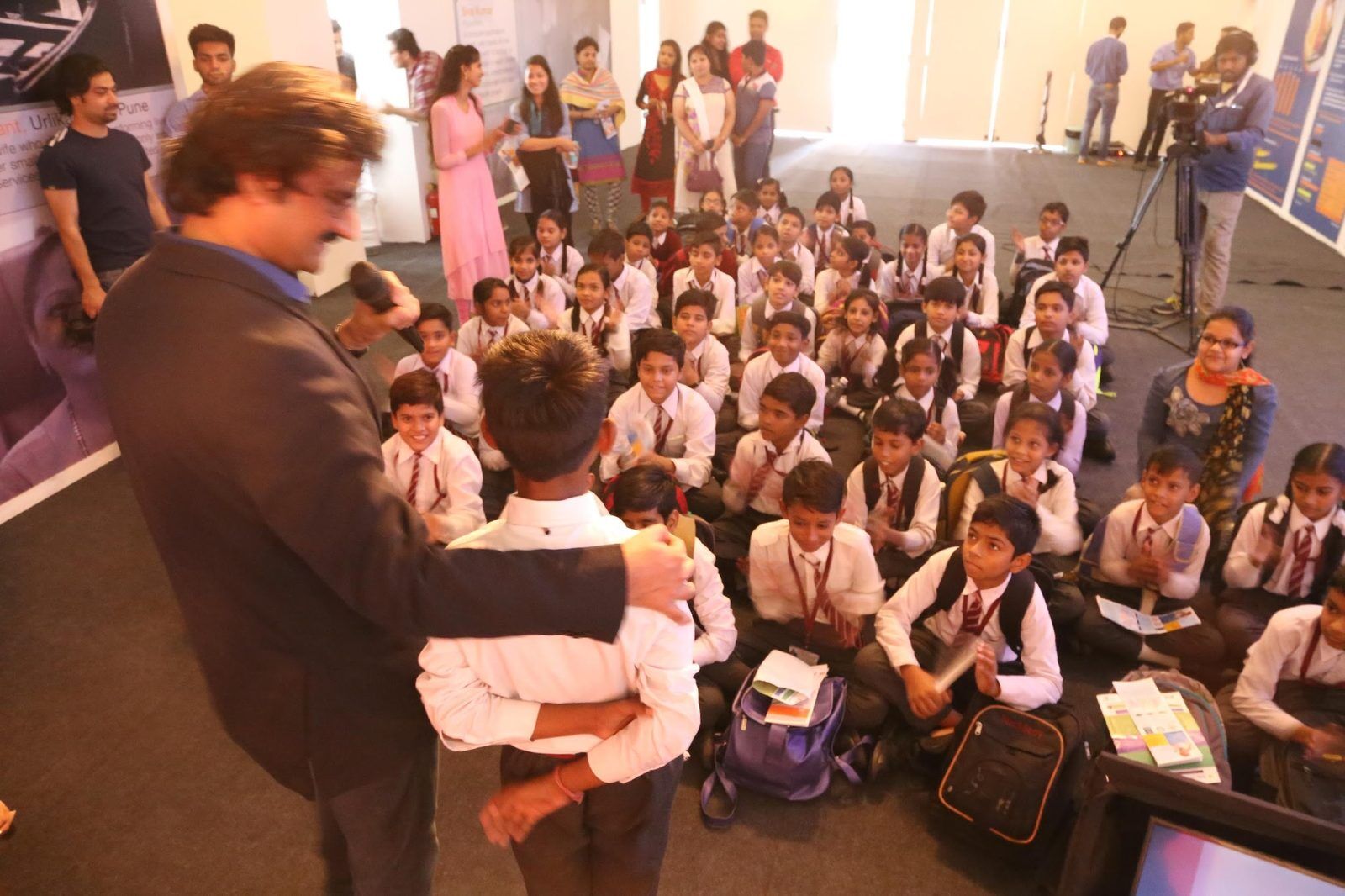
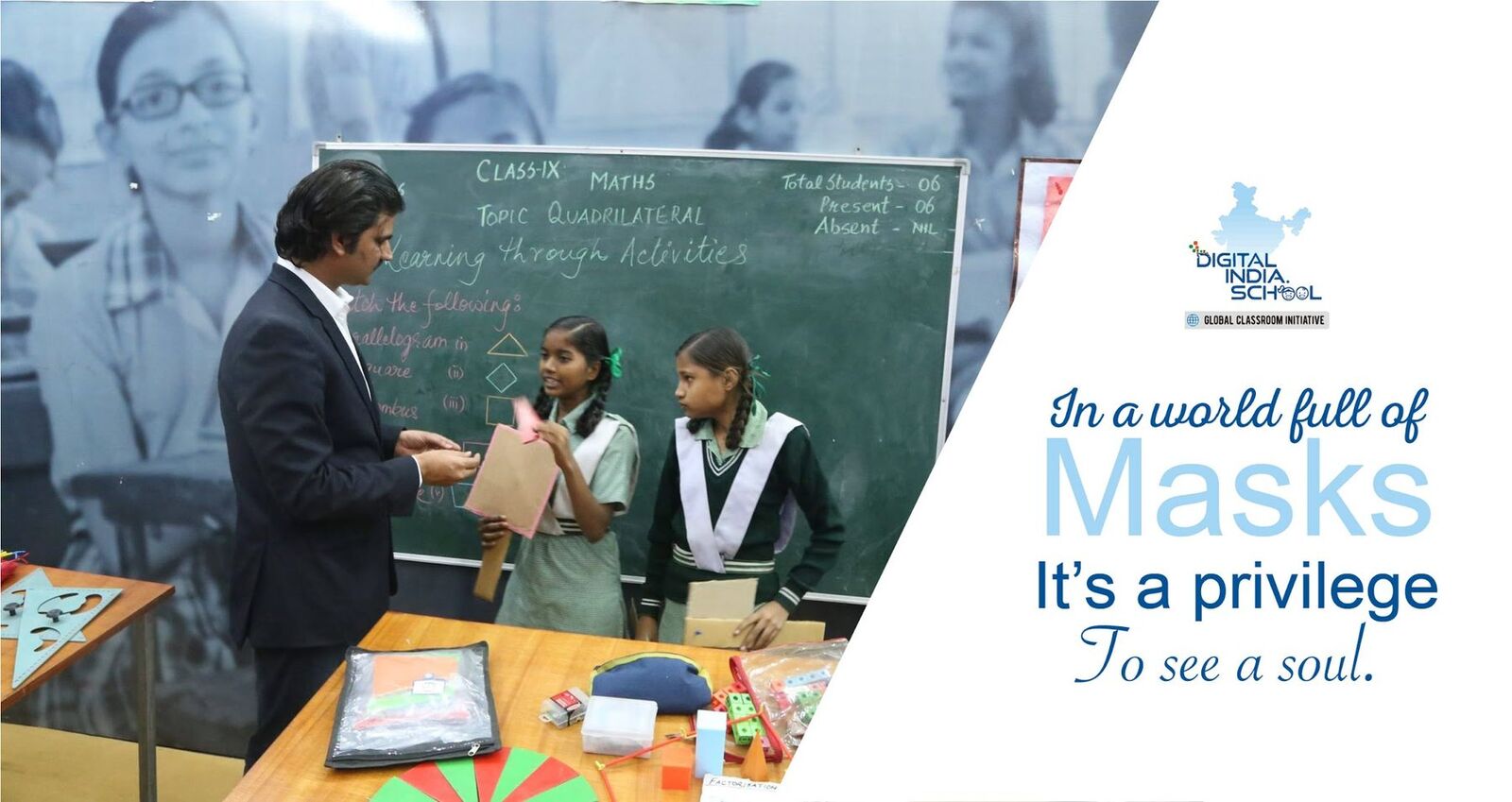
A Global Classroom is only as strong as the teacher running the room. Our training program covers interactive teaching methods, continuous comprehensive evaluation, co-curricular activity design, ICT skills, mass communication, and classroom research methods — turning apprehensive first-time computer users into teachers who use email daily and troubleshoot their own hardware.
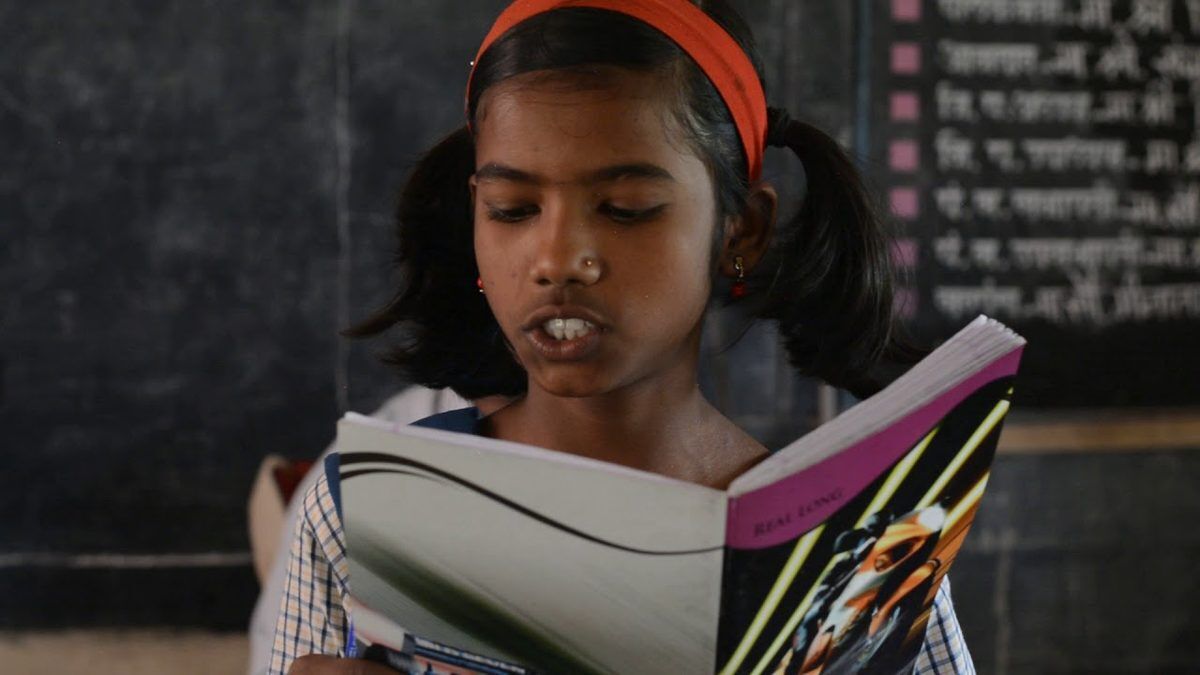
A dedicated strand of programming built specifically around the needs of girls and women in the communities we work with — individual and group life-coaching sessions, training meetings, and self-development programs. Educated women generate more income, raise healthier families, and are far less likely to face early or forced marriage — with ripple effects across poverty reduction, health outcomes, and reduced gender-based violence.
School Education is grouped by subject; Collegiate Education is grouped by role — because that's who's actually choosing a course at that level.
For students with little to no prior computer exposure — computers, keyboard and navigation basics, safe browsing, e-learning platforms, and basic digital communication.
Live, expert-connected sessions across five subjects, delivered with advanced ICT tools:
| Subject | Focus |
|---|---|
| Mathematics | Concept-building through interactive activities and teaching aids, not rote repetition |
| Science | Practical, experiment-based learning delivered through audio-visual and hands-on methods |
| English & Communication | Linguistic aptitude, listening/speaking skills, and confidence to interact with global experts directly |
| Information Technology | Applied ICT skills — the same skills teachers are trained in, taught at student level |
| Value Education | Civic sense, ethics, and the values central to eLMNOP's founding philosophy |
Individual and group life-coaching sessions, self-development and confidence-building modules, and awareness sessions connected to the broader Women's Empowerment strand.
Academic counselling and analytical/reasoning skill-building, public speaking and communication guidance, and preparation for direct interaction with visiting global experts.
For education and IT students preparing to work inside digital-first classrooms: ICT tools and platforms, designing e-learning kits and audio-visual content, and program/technology management for school-level rollouts.
For volunteers, global experts, and college students who want to run sessions directly with rural students: designing and delivering a live cross-border session, cultural context and inclusiveness, and follow-up/growth monitoring practices.
For B.Ed. students, training colleges, and in-service teacher upskilling: interactive teaching methods, continuous comprehensive evaluation, basic hardware troubleshooting and e-Lab maintenance, mass communication and classroom research methods.
Reflecting founder Santosh Talaghatti's own professional background: digital literacy as public policy, working with Gram Panchayats, Zilla Parishads, and Education Officers, and change management frameworks for community-level technology adoption.
Collegiate-level extension of the school-level empowerment track: advanced self-development frameworks, life coaching and mentorship program design, and the economic/social case for women's education.
All course fees are one-time, capped at ₹1,999, and paid securely via Razorpay. Hardware, connectivity and teacher-training costs for the school itself remain CSR/government-funded — see FAQ below.
No. Connectivity and hardware are exactly what the six-step Global Classroom process is built to secure through CSR and government partnerships. Schools with nothing in place today are the core mission, not an edge case.
Hardware, connectivity, and teacher training are funded through CSR partnerships and government support — the model is built so a school's limited budget isn't the barrier to participating. Specific arrangements are confirmed during the school-selection and community buy-in stage.
Standards 5–10, across Mathematics, Science, English, Information Technology, and Value Education, plus dedicated Girls Empowerment and Student Leadership tracks. See the full Course Menu above.
Timelines vary by village readiness — connectivity feasibility and CSR/government approvals are usually the pacing factors. The six-step process on our Global Classroom page is followed in order for every school.
Yes — the Collegiate & Educator Education track above (ICT certification, facilitator training, teacher training, e-Governance, and Women's Leadership) is built specifically for that audience.